In much of Fairfax County, the first frost typically arrives between about October 19 and 29 west of I-95, and in early November in the eastern and southern parts of the county. The first icy steps are rarely far behind. Before you grab a bag of ice melt, it helps to know that the wrong product or the wrong shovel can do more damage to a deck, patio, or set of stone steps than the storm itself.
How do you protect your deck, patio, and steps from snow, ice, and de-icers?
Short answer: Clear snow early with a plastic shovel, push along the boards, and use only the ice melt your surface’s manufacturer allows, sparingly. Skip de-icers entirely on concrete in its first year, avoid ammonium-based and magnesium chloride products on concrete and pavers, and rinse off residue in spring.
Each surface has its own rules, and some brands disagree with each other. If you are working through our fall home maintenance checklist, add the right shovel and the right ice melt to the list now, before the first storm empties the hardware store shelves.
| Surface | Ice melt guidance | Avoid |
|---|---|---|
| Trex composite | Calcium chloride or rock salt | Metal shovels |
| TimberTech composite and Advanced PVC | Calcium chloride products | Rock salt, sand, tinted ice melt, metal-edged shovels |
| Wood deck | Minimal, mostly on stairs | Rock salt, metal blades that gouge |
| Concrete, first year | None; use sand for traction | All de-icers |
| Concrete, older | Sodium or calcium chloride, in moderation | Ammonium nitrate or sulfate, magnesium chloride |
| Concrete pavers | Sodium chloride, only as much as needed | Magnesium chloride, calcium magnesium acetate |
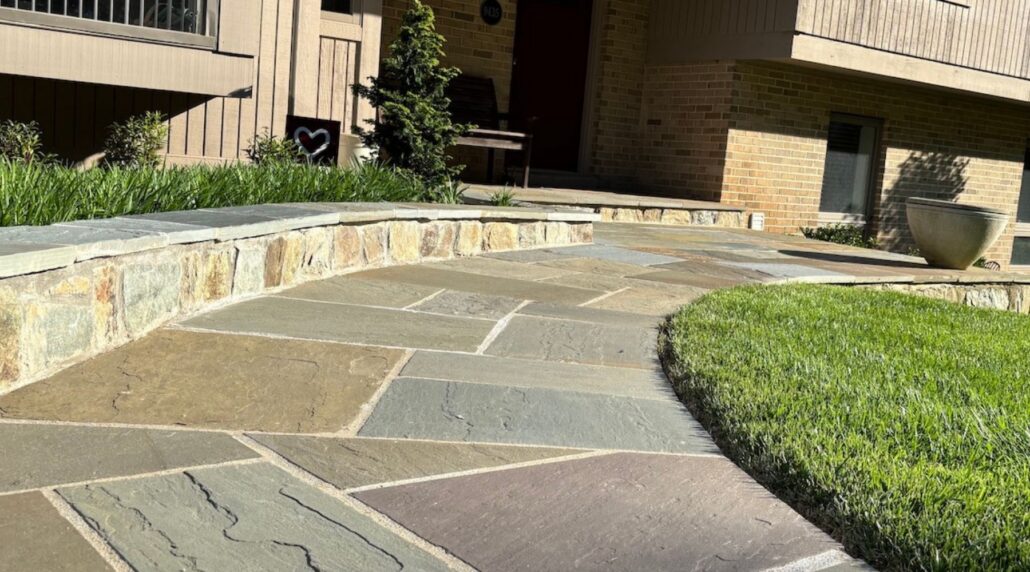
| Bluestone and flagstone | Sand or grit first, light de-icer use | Heavy salting, metal ice choppers |
How should you clear snow and ice from a deck?
Start with who made your boards, because Trex and TimberTech do not give identical advice.
Trex composite
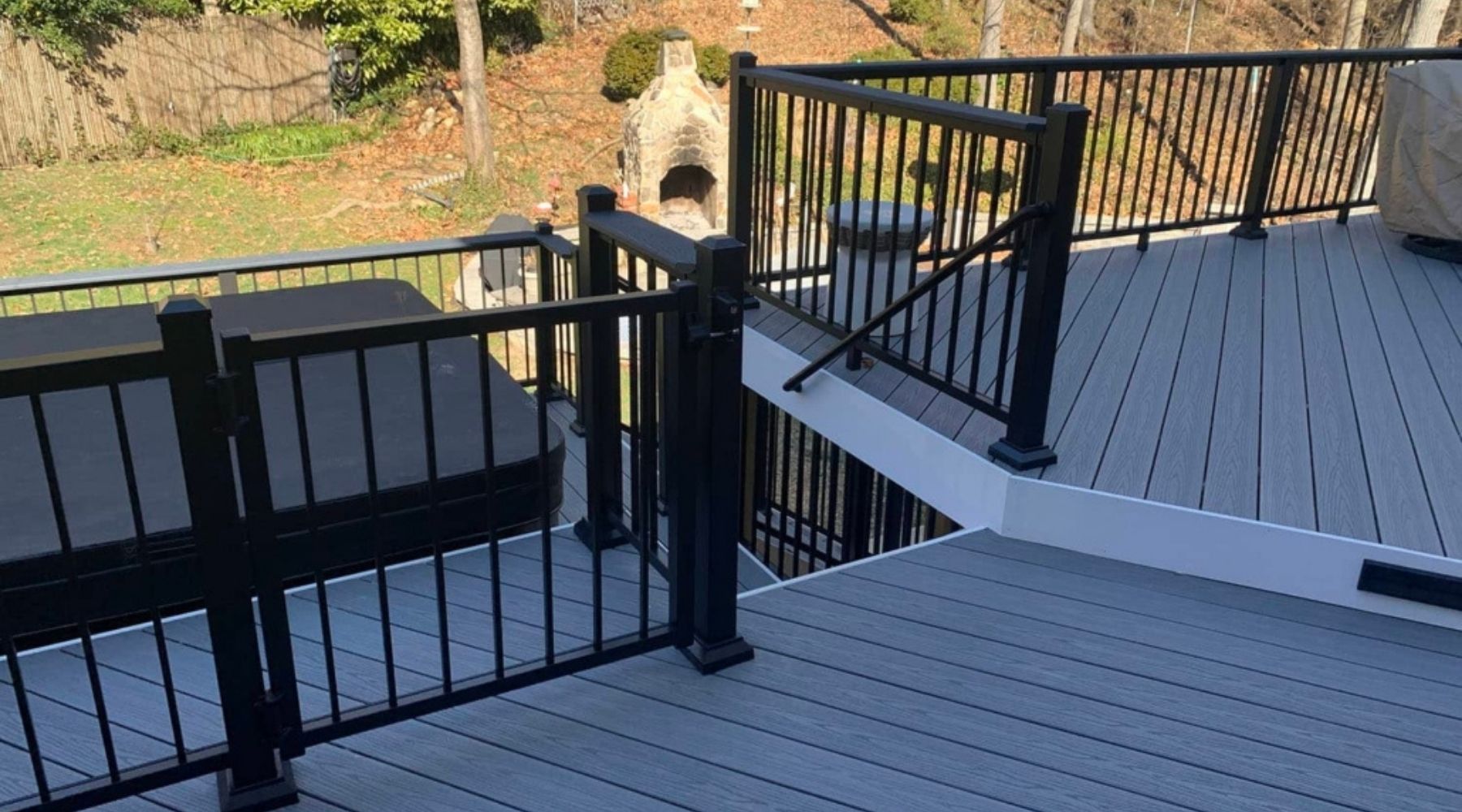
For current Transcend, Enhance, and Select decking, Trex’s care guidance says a plastic shovel may be used and that calcium chloride or rock salt can melt snow and ice on the surface. Trex also recommends shoveling in the direction of the boards to avoid dings. For older lines such as Accents, Trex says to rinse salt off when practical, never use a metal shovel, and notes that shovel scratches are not covered by the warranty.
TimberTech composite and PVC
The 2026 TimberTech care and cleaning guide, which covers its composite and Advanced PVC decking (the PVC boards many people still call AZEK), says most calcium chloride products can be used without damage but may leave a white residue to clean off once temperatures allow. It says to avoid rock salt and abrasive ice melts, and warns that metal shovels, or plastic shovels with a metal edge, will damage the surface. TimberTech’s winter tips also steer homeowners away from sand, tinted ice melts, and ice-chipping tools.
Since the two brands disagree on rock salt, calcium chloride is the product both allow. If you are not sure what is on your deck, our comparison of composite, wood, and PVC decking explains the main product types, and your original paperwork or a leftover board end will usually name the line.
Wood decks
Use a plastic shovel and push along the length of the boards, not across them, so the blade does not catch board ends or raised nail heads. There is no need to scrape down to bare wood. A thin layer left behind will usually melt off in the next sunny afternoon.
Go easy on chemicals. TimberTech’s winter guidance warns against rock salt on any deck, including wood, and salt is hard on the stain or sealer you paid for and on metal fasteners and connectors. Save ice melt for stairs and landings where footing matters most, and give the deck a good wash in spring. Our deck maintenance guide covers cleaning and resealing once the weather warms.
Can you use de-icer on a concrete patio or steps?
Yes, with limits. The biggest one is age. The Pennsylvania Aggregates and Concrete Association advises that de-icers should not be used on concrete less than one year old. If your patio, walkway, or steps were poured this year, use sand for traction this winter and nothing else.
- Never use ammonium nitrate or ammonium sulfate. Both are aggressive toward concrete, and both are common fertilizer ingredients, so lawn fertilizer is never a substitute for ice melt.
- Avoid magnesium chloride. The same guidance links magnesium chloride and potassium chloride products to much higher rates of deterioration.
- Use sodium or calcium chloride in moderation. These are generally considered acceptable on good-quality, dense concrete after its first year.
- Read the fine print. “Safe for concrete” claims often come with conditions of use.
Penetrating silane or siloxane sealers offer the most protection against de-icer damage. If your steps are already flaking, our concrete team in Fairfax can tell you whether repair or replacement makes more sense.
What about pavers, flagstone, and bluestone?
For interlocking concrete pavers, the Concrete Masonry and Hardscapes Association recommends standard road salt (sodium chloride), applied only as needed, and advises avoiding de-icers with magnesium chloride or calcium magnesium acetate. Sand helps traction and settles into the joints as the ice melts. Fix any raised pavers before winter, since a lifted edge can catch a shovel or snow blower.
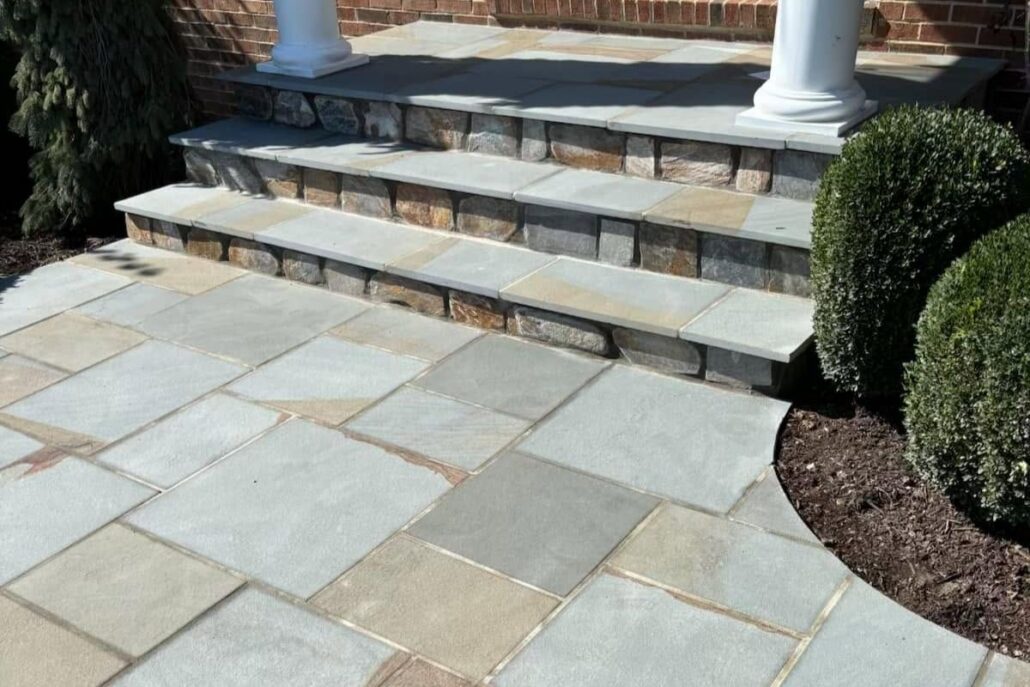
Natural stone takes more care. Salty meltwater soaks into stone, and as it dries the salt recrystallizes inside the surface. Over many freeze-thaw cycles, that can flake bluestone and flagstone treads. Clear snow before it packs down, lean on sand or traction grit, use de-icer lightly, and skip metal ice choppers that chip edges. Our post on pavers, concrete, and flagstone patios compares how each material holds up to our winters.
How do you keep stairs and landings safe?
Stairs and landings are where winter falls happen, so clear them first and clear them early, before foot traffic packs snow into ice. A few habits make a big difference:
- Keep a plastic shovel and the right ice melt by the door you actually use.
- Use sand or grit on concrete and stone steps, but not on composite, where it can grind into the surface.
- Check that handrails are solid before the first storm, not during it.
- Keep stair lights and porch lights working, since winter evenings are dark by 5 p.m.
- Avoid rubber-backed mats on composite and PVC decking; TimberTech warns they can discolor boards, and they trap moisture.
- Knock down icicles hanging over steps, railings, and walkways.
Watch your downspouts too. A downspout that empties onto a walkway or landing melts snow during the day and lays down a sheet of ice overnight. Extending it or redirecting it into the yard is one of the cheapest safety fixes around a house.

Is heavy snow a problem for decks and porch roofs?
For a sound, properly built deck, usually not. TimberTech says snow’s moisture and weight will not damage a properly installed TimberTech deck, and Fairfax County’s typical deck details design framing for a 40 pound per square foot live load. The worry is older decks with tired ledgers, undersized footings, or soft framing, plus deep drifts against the house or snow sliding off the main roof. On those decks, clear paths and heavy drifts, and stay off if you see sagging, new cracks, or the deck pulling away from the house.
Porch roofs, especially low-slope ones, can collect heavy snow and ice dams at the edges. Use a roof rake from the ground rather than climbing onto an icy roof.
What should you do in spring?
- Rinse composite and PVC decking to remove ice melt residue.
- Sweep sand and grit off patios, walks, and steps, and top off paver joints.
- Look for scaling, pitting, or new cracks in concrete.
- Check wood decks for worn finish, popped fasteners, and loose boards.
- Test railings, stair treads, and lights.
- Note any downspouts that caused ice so you can fix them before next winter.
How we can help
If winter leaves you with flaking steps, heaved pavers, or a deck that feels less solid than it should, we can inspect it and give you straight answers on repair versus replacement. When we build new, we slope patios and landings to shed water, plan downspout routes, and choose materials suited to freeze-thaw winters. Learn more about our deck and porch work and our patios and stonework.
Winter deck and patio FAQs
Is it safe to use rock salt on a composite deck?
It depends on the brand. Trex says calcium chloride or rock salt can be used on its current decking lines, while TimberTech says to avoid rock salt and use calcium chloride products instead. If you are not sure who made your boards, calcium chloride is the safer choice, and either way, rinse the deck once the weather warms.
Should I shovel snow off my deck or let it melt?
On a sound, properly built deck, letting snow sit is generally fine, and TimberTech says clearing all of it is not required. Do clear a path to doors and stairs so no one slips. On an older deck, or one you have doubts about, remove heavy drifts and snow that slides off the roof.
What can I put on ice instead of salt?
Sand or traction grit gives you grip without chemicals, which makes it the safest choice for concrete in its first winter and for natural stone like bluestone. It does not melt ice, so it works best on a thin layer. Skip it on composite decking, where TimberTech warns it can wear the surface, and sweep it up in spring.
Why is my concrete patio flaking after winter?
That flaking is called scaling. Water and de-icer solution soak into the surface, freeze, and pop off thin layers over repeated freeze-thaw cycles. Young concrete, harsh de-icers such as ammonium or magnesium chloride products, and surface finishing problems all make it worse. A penetrating sealer can slow it down, while severe scaling usually calls for resurfacing or replacement.
Can I use a snow blower on pavers or a deck?
On pavers, a snow blower is usually fine if you set the skid shoes so the scraper bar rides slightly above the surface and fix any raised pavers before winter. On composite and PVC decks, manufacturers point homeowners to plastic shovels, and a snow blower’s metal scraper bar can scratch boards, so a plastic shovel or a broom is the safer tool.
Manufacturer care and warranty guidance changes over time and varies by product line. Check the current care guide for your specific decking, pavers, or sealer, and follow the label directions on any ice melt product.
If you would like a professional look at your deck, patio, or steps before winter settles in, or you are planning repairs for spring, request a free consultation or call us at 703-587-7762.