
The leaves are turning, the first frost is a few weeks out, and daylight saving time ends Sunday, November 1. That makes the next month the best window to get your house ready for winter, while the weather still cooperates.
What should be on a fall home maintenance checklist in Northern Virginia?
Short answer: Focus on water and cold. Clean gutters once most leaves are down, check the roof, seal wood decks while temperatures allow, recaulk gaps around windows and doors, shut off and drain outdoor faucets before the first hard freeze, test the sump pump, service the furnace, and test smoke and CO alarms when the clocks change.
When should you do fall maintenance in Northern Virginia?
Timing matters more than most checklists admit. Based on NOAA climate normals for Vienna, the first frost typically arrives in the last week of October, and a hard freeze (28°F) usually follows in early to mid November. Leaf color tends to peak in the second half of October here, and leaves keep falling for weeks afterward, with oaks often hanging on the longest.
- Early to mid October: jobs that need mild, dry weather, like exterior caulking, paint touch-ups, and deck cleaning and sealing.
- Late October to early November: hoses, outdoor faucets, and irrigation, before the first hard freeze.
- Sunday, November 1: clocks fall back, a good reminder to test smoke and carbon monoxide alarms.
- Mid to late November: the big gutter cleaning, once most leaves are down.
Your fall checklist, area by area
Roof and gutters
- Look over the roof from the ground. Binoculars will show missing, lifted, or cracked shingles and loose flashing before winter storms find them. Our guide to checking your roof after a storm shows what to look for.
- Clean gutters after most leaves fall. Under heavy tree cover, plan on two cleanings, one mid-season and one after the last leaves drop.
- Extend downspouts. Fairfax County’s marine clay guide recommends discharging roof water at least 10 feet from the foundation, and that is good practice on any clay soil.
- Trim branches touching the roof. They scrape shingles, drop debris into gutters, and give squirrels a path to the attic.
- Check the attic after a heavy rain. Stains or damp insulation point to a leak. If your roof is near the end of its life, our roof replacement guide covers cost, timing, and permits.
Decks, porches, and patios
- Clear leaves and clean the deck. Wet leaf piles stain boards and hold moisture against wood and composite alike.
- Stain or seal wood only while it is warm enough. Cabot, for example, puts the ideal range at 50 to 80°F with no rain expected for 24 hours, so check your product’s label. Composite and PVC decking do not need sealing.
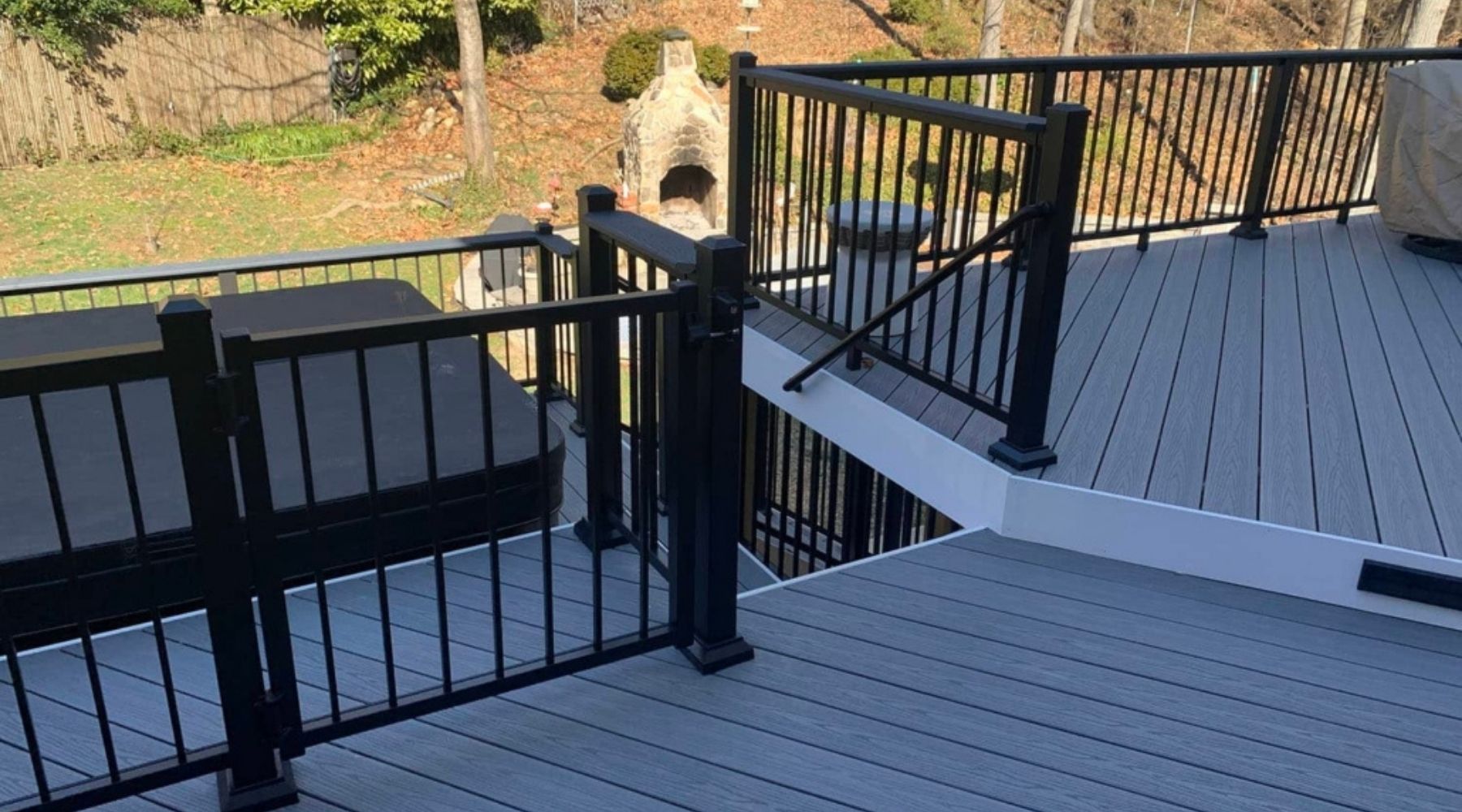
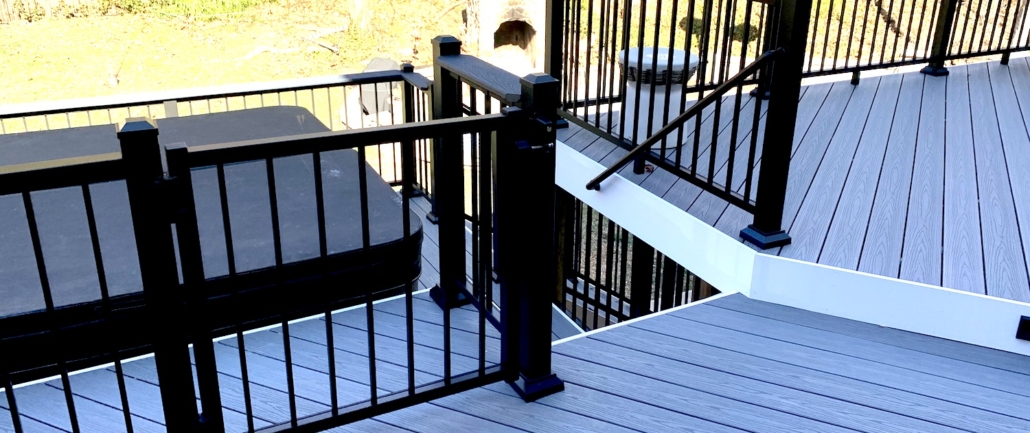
- Check posts, ledger, stairs, and railings. A wobbly railing or soft wood near the ledger board is worth fixing before snow and icy steps.
- Clear under-deck drainage. If you have a dry space below the deck, make sure troughs and downspouts are free of leaves. See our post on under-deck drainage for how these systems work.
- Refill patio joints and seal concrete cracks. Water in joints and cracks freezes and expands, so close them up now. Our patio materials guide explains how each surface handles freeze-thaw.
- Keep rock salt off new concrete. Concrete in its first year is especially vulnerable to de-icers, so plan on sand for traction.
Siding, windows, and doors
- Walk the outside of the house. Cracked caulk at trim, windows, and pipe or vent penetrations lets in water and cold air.
- Recaulk before it gets cold. Many exterior sealants need temperatures above 40°F and no rain or freezing weather for 24 hours (DAP’s Dynaflex 230 is one example).
- Check siding and trim. Cracked vinyl, soft or peeling wood trim, and open joints all let water behind the wall. If repairs keep piling up, our fiber cement vs vinyl siding comparison can help you plan a replacement.
- Replace worn weatherstripping and door sweeps. If you can see daylight around a closed door, you are paying to heat the outdoors.
- Look for fogged glass, rot, or drafts at windows. Fog between panes means a failed seal. If several windows are failing, read our guide to replacing windows before winter.

Plumbing and outdoor faucets
- Disconnect hoses before the first hard freeze. Even frost-free sillcocks need the hose off so water can drain from the valve; Watts’ instructions, for example, say the hose must be removed to prevent freezing.
- Shut off and drain outdoor faucets. Fairfax County Fire and Rescue advises shutting off water to outdoor faucets and unheated areas. Close the inside valve, then open the outside faucet to drain it.
- Winterize irrigation. Have sprinkler lines drained or blown out before freezing weather.
- Insulate exposed pipes in crawl spaces, garages, and unheated parts of the basement.
- Find your main water shutoff. If a pipe bursts, knowing where it is limits the damage.
Basement and drainage
- Test the sump pump. Pour water into the pit and confirm the pump starts and discharges well away from the house.
- Check grading at the foundation. Soil should slope away from the house, so fill low spots where water collects.
- Look for signs of moisture. White mineral deposits, musty smells, or damp carpet after rain point to a water problem. Our post on finishing a basement in Fairfax County covers moisture control.
- Clean out window wells. Leaves in a window well hold water against the basement window.
Inside the house
- Test smoke and CO alarms on November 1. The U.S. Fire Administration recommends testing smoke alarms monthly, replacing batteries at least yearly, and replacing the alarm every 10 years.
- Schedule a heating tune-up. Energy Star recommends a heating system checkup every fall and checking the filter monthly.
- Book a chimney inspection. NFPA 211, the standard chimney sweeps follow, calls for chimneys, fireplaces, and vents to be inspected at least once a year.
- Check the dryer vent. Make sure the duct is not crushed and the outside flap opens when the dryer runs.
- Reverse ceiling fans. Running them clockwise on low in winter pushes warm air back down from the ceiling.
What can you do yourself, and what should you leave to a pro?
Most of this list is homeowner friendly: hoses and faucets, filters, alarms, ground-level caulking, leaf cleanup, and patio joints. Call a pro for anything that means climbing onto the roof or working off a ladder at second-story height, structural deck repairs, active roof leaks, rotted trim or siding, and anything involving gas lines or venting.
Book these before winter
- Roof repairs or a roof inspection, ahead of winter storms
- Gutter cleaning on two-story homes, plus gutter guards if you are under heavy trees
- Deck structural repairs, loose railings, and stair fixes
- Furnace or heat pump service and a chimney inspection
- Window, door, trim, and siding repairs while it is still warm enough for sealants and paint
Local tip: Contractor calendars fill quickly after the first cold snap. Booking roof, gutter, and window repairs in October is the best way to get them done before the holidays.
How we help
Our team handles the exterior work that is hard to do from the ground: roof and gutter repairs, deck repairs and railing fixes, trim and siding repairs, and window and door replacements. If something on your checklist turns out to be a bigger project, we will look at it and give you straight advice on whether to fix it now or plan for spring. Learn more about our roofing and gutter services.
Fall home maintenance FAQs
When should I clean my gutters in the fall?
Wait until most leaves are down, which in Northern Virginia usually means mid to late November, then check again if trees keep dropping. Homes under heavy oak or tulip poplar cover often need two cleanings. Clearing gutters before hard freezes keeps water and ice from backing up in clogged troughs.
Is it too late to stain my deck in October?
Not always. Many stains want air and surface temperatures of about 50°F or higher and a dry day afterward, so early and mid October often still work. Watch the overnight lows and the forecast, follow the label, and if the window closes, clean the deck now and stain in spring.
Do frost-free outdoor faucets need to be winterized?
Yes, at least partly. A frost-free faucet shuts off water inside the wall, but it only drains when the hose is removed. A hose left attached traps water in the valve, which can freeze and split the pipe inside your wall, where you may not notice until it leaks. Disconnect hoses before the first hard freeze.
How often should smoke and carbon monoxide alarms be replaced?
The U.S. Fire Administration recommends replacing smoke alarms every 10 years. Carbon monoxide alarm lifespans vary by model, so follow the replacement date printed on the unit. Check the dates when you test your alarms on November 1, and replace any alarm that is past its date or fails a test.
What is the most important fall maintenance task?
Managing water. Clogged gutters, short downspouts, and cracked caulk cause a large share of winter damage, because water that gets into walls, foundations, or deck framing freezes, expands, and keeps coming back. If you only have one weekend, spend it on gutters, downspouts, and sealing gaps around the outside of the house.
Want a second set of eyes on your roof, deck, or windows before winter? Request a free consultation or call 703-587-7762, and our team will help you sort out what needs attention now and what can wait until spring.