Labor Day weekend is when a lot of Northern Virginia homeowners stand on a friend’s deck, plate in hand, and decide they want one of their own by next summer. When you act on that thought matters more than most people expect. Start planning this fall and a Memorial Day cookout on your own deck is realistic; wait until April to make the first call and you may still be waiting in July.
When is the best time to build a deck in Northern Virginia?
Short answer: For most homeowners, the best time to start is late summer or fall. Design and HOA review fit easily into the fall, county permit review can happen over the winter, and construction can run almost any time the ground is not frozen. Starting early puts you near the front of the spring line instead of behind it.
Decks can be built most of the year here. The real bottlenecks are scheduling and paperwork, not the weather, and both are easier to manage when you start months ahead of the season you care about.
Why are fall and winter often the smartest time to start?
- Contractor schedules: In our experience, deck calls spike as soon as the weather turns warm. By the time the azaleas bloom, many builders are booked well into summer.
- County review: Fairfax County has urged homeowners to apply before the spring rush because higher application volumes increase wait times. Our guide to getting a Fairfax County deck permit covers the PLUS portal, typical review times, and the three required inspections.
- HOA review: Many architectural committees meet once a month, so a single round of questions can add several weeks.
- Time to choose materials: Picking between boards, colors, and railings is easier without a deadline. Our comparison of composite, wood, and PVC decking is a good place to start.
- A clearer view of the yard: With the leaves down, it is easier to see grade, drainage paths, and the tree roots that so many wooded Vienna and McLean lots hide in summer.
How deep do deck footings need to be in Fairfax County?
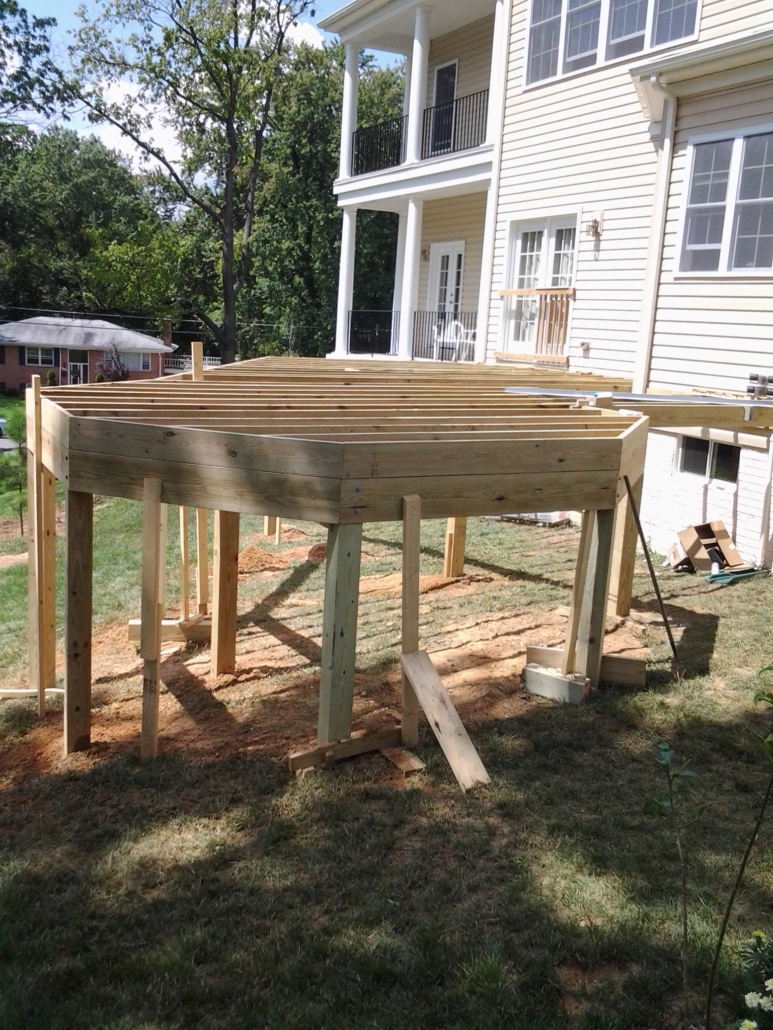
Fairfax County’s Typical Deck Details, which follow the 2021 Virginia Residential Code, require footings to bear on solid ground 24 inches below grade, and deeper if solid ground is not found at that depth. That 24 inches is the local frost depth, the point below which the soil should not freeze and push a footing upward. A county inspector has to verify the bearing conditions before any concrete is placed.
Footing size depends on the beam span and how much deck each post carries. The county’s tables run from 12-inch square pads for light loads up to much larger footings for long spans, which is one reason two decks of the same size can have very different foundations.
Local tip: Clay soils are common across Fairfax County, and some neighborhoods sit on fill or marine clay. If the bottom of a footing hole is soft or wet, the fix is to dig deeper or redesign the footing, not to pour and hope. Budget a little contingency for what the auger finds.
What can and can’t happen in cold weather?
Digging and pouring footings
Digging works whenever the ground is not frozen hard. In most Northern Virginia winters, the soil freezes near the surface during a cold snap and thaws again within days, so there are usually plenty of workable days. Concrete is the stricter part. It should never go onto frozen ground, and the National Ready Mixed Concrete Association recommends protecting fresh concrete from freezing until it reaches 500 psi, which typically takes about two days. Insulated blankets and careful scheduling around the forecast handle most winter pours.
Framing
Pressure-treated posts, beams, and joists go up fine in cold weather. Winter days are shorter, so the same framing simply takes a few more days on the calendar.
Composite and PVC boards
Synthetic decking can be installed in cold weather, but the gaps change. Trex’s installation guide calls for wider end-to-end gaps when boards go down below 40°F, because cold boards are at their shortest and will grow in summer heat. TimberTech’s composite guide adjusts butt-joint gaps by temperature and requires pre-drilling below 45°F to avoid split ends and sheared screws. We follow the current guide for the exact product on your deck, since warranties depend on it.
Wood moisture and finishing
Pressure-treated lumber often arrives wet from the treatment plant and shrinks as it dries, more slowly in cold, damp months. That is normal, but it means stain or sealer usually waits until the wood has dried out and the weather is warm enough for the product’s label. Our deck maintenance guide explains how often to reseal once you get there.
What does a backward timeline from Memorial Day look like?
Here is how the calendar typically works if you want your deck ready for Memorial Day weekend 2027 (May 31).
- October to December: Site visit, design, material choices, construction drawings, and a house location plat for the permit application.
- January to February: HOA architectural review, with time for one round of revisions.
- February to March: County permit review. Plan on several weeks for a straightforward deck, and longer if reviewers ask for corrections.
- April to mid-May: Construction, including footing, framing, and final inspections, plus a buffer for rainy weeks.
- Late May: Final inspection passed, furniture on, grill lit.
If you would rather build over the winter, shift everything earlier: design in September, permit by December, and build during a dry stretch in late winter.
How long does a typical deck build take?
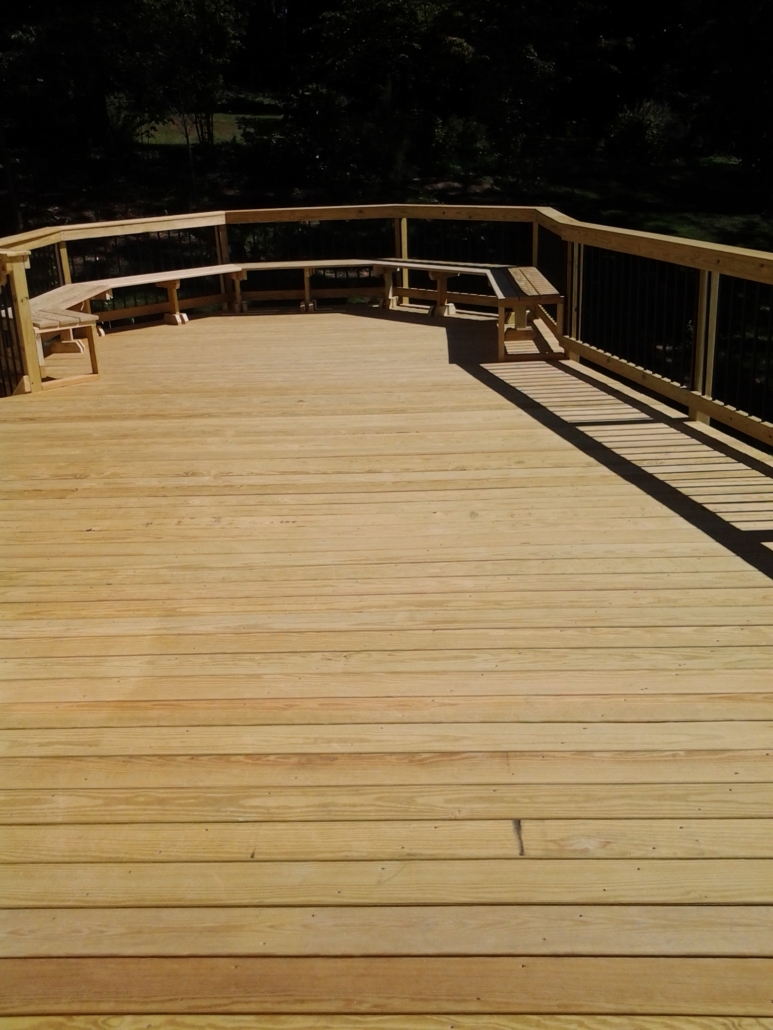
Once the permit is issued, most single-level decks we build take about one to three weeks on site. Multi-level decks, long stair runs, built-in benches, and lighting add time, and so does a roof. If you are still deciding between an open deck and something covered, our comparison of a screened porch, sunroom, or open deck explains how each changes the schedule and budget.
Inspections are part of the timeline too. The footing inspection has to pass before concrete, and the framing inspection has to pass before decking covers the structure, so each one adds a short scheduling gap.
Is it cheaper to build a deck in the off-season?
Myth: winter means a big discount
Not reliably. Lumber and decking prices follow supplier price lists, not the thermometer, and labor rates rarely swing much from season to season. What you gain in the off-season is calendar: more flexible start dates, more time for design, and a permit that is not stuck in the spring queue. If a winter price looks dramatically lower than other quotes, compare the scope line by line.
Myth: decks can’t be built in winter
Most of the work can. True frozen-ground days are the exception here, and concrete, framing, and synthetic decking all have cold-weather methods.
Myth: calling in spring still gets you a summer deck
Sometimes, but it is tight. Design, HOA review, and permitting can easily take two to three months before construction starts.
How we help you plan ahead
We do most of our design and permitting work in the fall and winter so our clients can start building as soon as the calendar allows. We handle the drawings, plat, permit application, and inspections, and we keep you updated on where things stand. Learn more about our deck and porch services, or see our pages for deck builders in Vienna and deck installation in Fairfax.
Deck building season FAQs
Can you pour concrete footings when it is below freezing?
It can be done with precautions, but never onto frozen soil. Builders typically pour when the forecast allows, use warm concrete, and cover the footings with insulated blankets so the concrete does not freeze while it gains early strength. If a hard freeze is settling in for several days, it is usually better to wait for the next mild stretch.
How far in advance should I book a deck builder?
For a spring or early summer deck, reach out four to six months ahead. That leaves time for a site visit, design, HOA approval, and county permit review before construction starts. Larger or more complex decks, and anything with a roof, benefit from even more lead time because the drawings and reviews take longer.
Will a deck built in winter heave or settle in the spring?
Not if the footings are built correctly. Frost heave happens when water in the soil freezes beneath a footing that is too shallow. Footings that bear on solid ground below the 24-inch frost depth, and that pass the county’s footing inspection before concrete, should stay put no matter which month the deck was built.
How soon can I stain a new pressure-treated deck?
Wait until the wood has dried enough to absorb finish. A simple test is to sprinkle water on a board: if it soaks in, the wood is usually ready, and if it beads up, give it more time. Drying can take a few weeks in summer and longer in cool weather, so a deck built in winter is often stained in spring.
Can I pull my own deck permit in Fairfax County?
Homeowners can apply for their own deck permit, but Fairfax County strongly recommends having a properly licensed contractor pull permits. Whoever holds the permit is responsible for meeting code, scheduling inspections, and correcting anything an inspector flags, so most homeowners find it simpler to have their builder handle it.
Permit procedures, review times, and manufacturer installation guidance change over time. Confirm current requirements with Fairfax County Land Development Services or your local permit office, and with the manufacturer of the decking you choose.
If you want a new deck ready for next spring, now is a good time to start the conversation. Request a free consultation or call us at 703-587-7762, and we will help you map out a realistic timeline.