July in Northern Virginia brings humid afternoons that can turn into thunderstorms with little warning. Most leave nothing worse than twigs on the patio, but strong gusts, falling limbs and the occasional burst of hail can damage a roof in ways you won’t see from the driveway. Here is how to check yours safely, what to document, and how to avoid the contractors who follow storms door to door.
How do I know if my roof has storm damage?
Short answer: Walk the house from the ground and look for missing, lifted or creased shingles, piles of granules at downspout outlets, dents in gutters and vents, and branches on the roof. Then check your top-floor ceilings and attic for fresh stains or damp insulation. If you spot any of these, get a professional inspection before the next storm.
Wind damage often shows up on the back slopes, and hail marks on shingles can be subtle, so a roof can look fine from the front walk and still need attention.
Start with a safe check from the ground
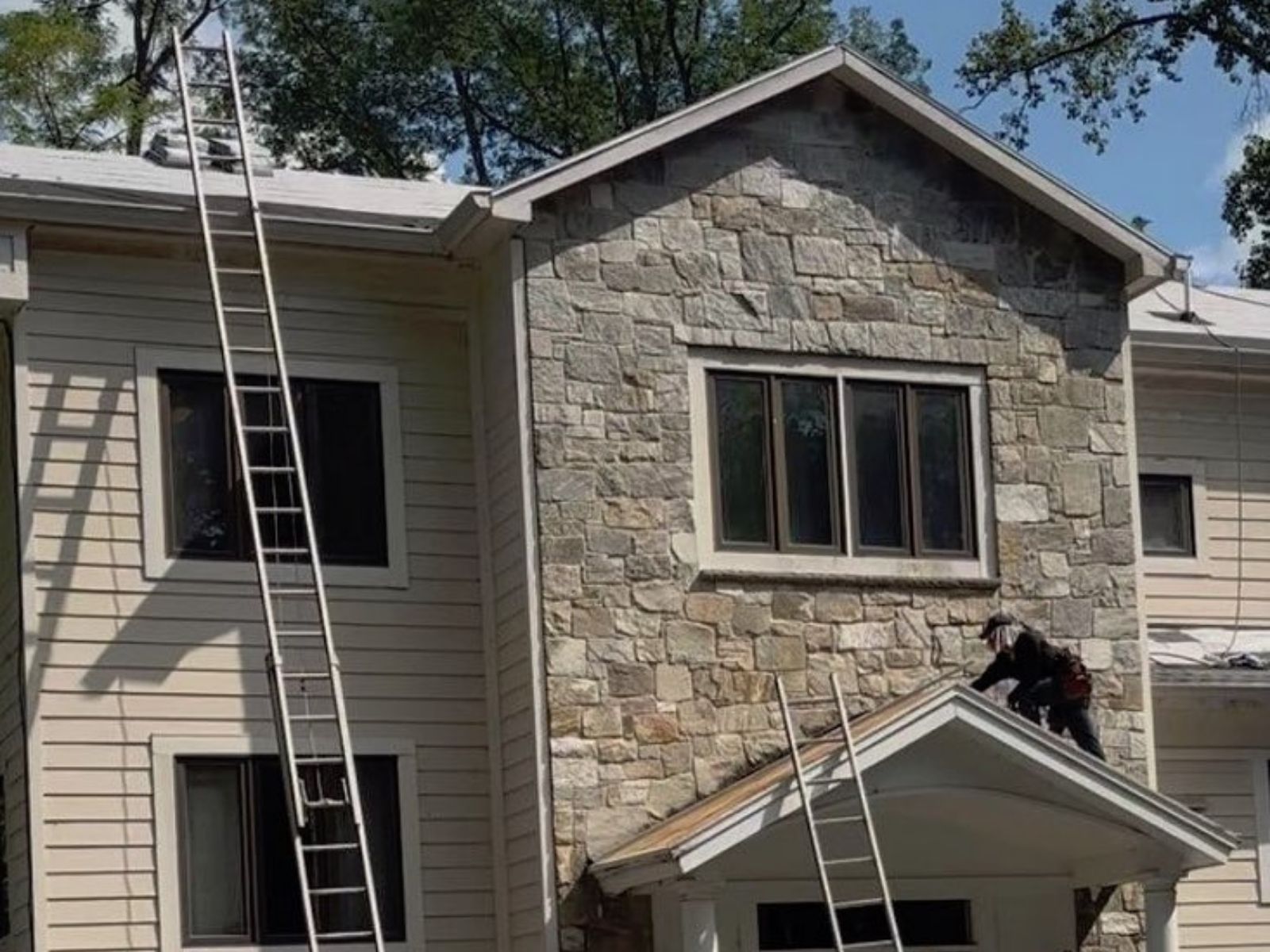
Please don’t climb onto your roof after a storm. Wet shingles are slick, damaged decking can give way, and ladders on soggy ground cause a lot of summer injuries. If you see a downed wire near the house, stay well clear and call your electric utility or 911.
Then walk the whole house, front and back, with binoculars or your phone’s zoom:
- Gaps, out-of-line shingles or dark patches on each slope, especially along the ridge and edges
- Shingle pieces, ridge caps or bent strips of metal in the yard and flower beds
- Piles of sandy granules at downspout outlets and splash blocks
- Dents, sagging runs or loose brackets on gutters and downspouts
- Dented or lifted roof vents, pipe flashing and chimney flashing
- Loose siding panels, torn screens and dented window wraps on the storm-facing side
If your gutters overflowed, note where the water went. Runoff dumping at the foundation or onto a lower deck is worth fixing on its own, and our post on under-deck drainage and keeping the space below your deck dry explains why.
Local tip: Under the mature oaks and poplars of Vienna, Oakton and McLean, limbs often land on the back slope where you can’t see them from the street. A branch left in a valley traps leaves and water against the shingles, so have it removed even if the roof looks fine.

Signs of wind and hail damage
Wind damage
Wind gets under the edge of a shingle and lifts it. Sometimes the shingle tears off, leaving a gap or exposed underlayment. Other times it flips up and settles back with a crease across it. A creased shingle has lost its seal, and the next strong storm will likely take it. Also look for missing ridge caps, bent drip edge and lifted flashing at walls and chimneys.
Hail damage
The National Weather Service treats hail one inch across (about quarter size) or larger as severe, but smaller hail can still mark a roof. Soft metal tells the story first: dents in gutters, downspouts, vents and air conditioner fins are good clues. On shingles, hail knocks granules loose and leaves dark, bruised spots. A new roof sheds a few loose granules at first, which is normal. A sudden pile at the downspouts of an older roof after a hailstorm is not.
Inside the house
Check top-floor ceilings for new stains or bubbling paint. If you can safely get into the attic, look with a flashlight for damp insulation, wet spots on the underside of the roof boards, or daylight where there shouldn’t be any.
If a fallen branch hit your deck, run through the checks in our deck maintenance guide for Northern Virginia. If part of the deck has to be rebuilt, our guide to Fairfax County deck permits explains the county process.
Document everything before cleanup
Virginia’s Bureau of Insurance advises photographing or recording damage before you clean up or make repairs. A few minutes with your phone now saves a lot of back and forth later.
- Wide shots of each side of the house, then close-ups of anything damaged
- Hailstones next to a coin or ruler, plus the date and time of the storm
- Interior stains, wet insulation and damaged belongings
- Receipts for tarps, tree work and temporary repairs, and any damaged materials until the adjuster sees them
Does homeowners insurance cover roof storm damage?
In most cases, a standard homeowners policy covers sudden damage from wind and hail, minus your deductible. It usually doesn’t cover wear and tear, such as shingles that are simply old or leaks from neglected flashing. The wording in your policy is what counts, so check two things before you file:
- Your wind or hail deductible. Some are a flat dollar amount. Others are a percentage of your dwelling coverage, so a 2% deductible on a home insured for $600,000 means the first $12,000 is yours.
- How the roof is valued. Some policies pay replacement cost. Others pay actual cash value, which subtracts depreciation and can make a big difference on an older roof.
Call your agent or insurer promptly. Insurers in Virginia must acknowledge a claim within 10 working days, and the Bureau of Insurance disaster guide for homeowners covers the rest of the process, including holding off on contracts for major repairs until the insurer has assessed the damage.
Temporary tarping
If water is getting in, a tarp buys time. The Bureau recommends protecting the house from further damage, such as by tarping the roof, even before the adjuster visits, and notes that most policies cover the reasonable cost of emergency temporary repairs. A good tarp runs up and over the ridge and is fastened so wind can’t get underneath. Leave that job to a roofer.
Should I get a roof inspection after a storm?
Yes, if you saw any of the signs above, if your area had hail or a severe thunderstorm warning, or if your roof is more than about 15 years old. Older shingles are more brittle and lift more easily in wind that a newer roof would shrug off.
A good inspection comes with photos and a plain explanation of what’s storm damage, what’s normal aging, and whether a repair or a claim makes sense. It shouldn’t come with pressure to sign that day, and it doesn’t have to come from whoever knocked on your door.

How to avoid storm-chaser contractors
After big storms, crews from outside the area often canvass neighborhoods, sign up as many roofs as they can, and move on. Virginia’s Department of Professional and Occupational Regulation (DPOR) warns that consumers have very little recourse against unlicensed contractors. Be cautious if someone:
- Shows up uninvited and offers a “free roof” paid for by insurance
- Pushes you to sign today, especially an authorization tied to your claim
- Offers to cover or waive your deductible
- Wants cash or full payment before work starts
- Can’t give you a Virginia contractor license number or a local physical address
Before you hire anyone, take these steps:
- Verify the license. Virginia requires a state contractor license, not just a local business license, for most jobs over $1,000. Check the company with the DPOR license lookup and make sure the license is current and fits the job.
- Confirm insurance with the contractor’s insurance agent.
- Get a written contract with the scope, materials, price, payment schedule, and start and completion dates.
- Limit the deposit. DPOR suggests paying no more than 10% or $1,000 down, whichever is less, never paying cash, and holding the final payment until you’re satisfied.
- Ask for local credentials. Fairfax County requires contractors who seek work door to door to carry a solicitor license from the Department of Cable and Consumer Services.
If you sign at home with a contractor who came uninvited, Virginia’s Home Solicitation Sales Act generally lets you cancel in writing until midnight of the third business day after signing.
Watch out: An offer to “take care of” your deductible is a red flag. Virginia passed a law in 2026, effective January 1, 2027, that specifically bars contractors from paying, waiving or rebating insurance deductibles on owner-occupied homes and adds new disclosure rules for roofing contracts tied to insurance claims.
How we help after a storm
Our team has worked on Northern Virginia homes since 2010, and storm checks are a regular part of our summer. We’ll inspect your roof and gutters, show you photos of what we find, and tell you honestly whether you need a repair, a replacement, or nothing at all. If it is time for a new roof, our guide to roof replacement costs, timing, and permits covers what to expect. If it’s an insurance matter, we document the damage and work with your insurer on the repair scope.
Learn more about our roofing and gutter services, including roof repair and replacement in Oakton, and our siding repair and replacement if wind pulled panels loose.
Roof storm damage FAQs
How long do I have to file a roof damage claim after a storm?
It depends on your policy. Most policies require prompt notice of a loss, and some set specific deadlines, so check yours or call your agent soon after the storm. Waiting can also make it harder to show that this storm caused the damage, especially if more storms roll through first.
Can hail damage a roof even if I can’t see it from the ground?
Yes. Hail bruises on asphalt shingles are often small and hard to spot from below, and granule loss may only show up as grit at the downspouts. Dents in gutters, vents or your air conditioner suggest the roof took hits too. An inspection with close-up photos is the only way to know for sure.
Do I need a permit to repair storm damage on my roof in Fairfax County?
Usually not for shingles. Fairfax County lists replacement of roof shingles as work that doesn’t need a building permit, along with replacing less than 256 square feet of roof plywood. Replacing more decking than that needs a permit, townhouses with fire-rated sheathing follow stricter rules, and repairs to rafters or other framing generally need a permit too.
What should I do if my roof is leaking during a storm?
Stay off the roof until the weather clears. Inside, move furniture and electronics away from the leak, catch water with buckets or towels, and photograph the damage. If water is near a light fixture or outlet, turn off that circuit at the panel if you can do it safely, keep everyone out of any room with a sagging ceiling, and call a roofer for an emergency tarp.
This article is general information, not legal or insurance advice. Coverage depends on your policy’s wording, so confirm the details with your agent or insurer.
If a summer storm left you wondering about your roof, we’re happy to take a look. Request a free roof inspection or call us at 703-587-7762, and we’ll give you a straight answer about what we find.