Fall is prime roofing season in Northern Virginia. Mild, sunny days give new shingles the warmth they need to seal down before winter, and a roof finished in September or October is ready for the first cold snap. If your roof has been showing its age, here is what replacement costs in 2026, how to tell when it’s time, and what Fairfax County requires.
How much does a roof replacement cost in Northern Virginia in 2026?
Short answer: For a typical single-family home with architectural asphalt shingles, a full tear-off and replacement in 2026 often runs about $15,000 to $35,000, depending on roof size, pitch and how much decking needs replacing. Large or complex roofs cost more, and standing seam metal often costs 1.5 to 2.5 times as much as shingles.
Roofers price by the “square,” which is 100 square feet of roof surface. Many of the homes we see for roof replacement in Oakton, Vienna and Fairfax have somewhere between 20 and 35 squares, and installed prices for architectural shingles in our area commonly fall around $600 to $1,000 per square, including tear-off. Bigger homes in McLean and Great Falls with steep pitches and complicated rooflines can run well past that range, while townhouse roofs usually cost far less.
For a national benchmark, the 2025 Cost vs Value report put a mid-range asphalt shingle replacement on a 30-square roof at $31,871, and a standing seam metal roof of the same size at $51,865.
What drives the price of a new roof?
- Size, pitch and complexity. Steep roofs slow the crew and need more safety setup. Valleys, dormers, skylights and chimneys add flashing and labor.
- Layers and decking. A second layer of old shingles adds labor and disposal. Rotted plywood can’t be seen until the old roof is off, so a good contract lists a per-sheet replacement price.
- Ice and water shield. Building departments in Northern Virginia require an ice barrier along the eaves of shingle roofs, running at least 24 inches inside the exterior wall line. We also use it in valleys and around chimneys and skylights.
- Underlayment and ventilation. Synthetic underlayment holds up better than felt if a pop-up shower hits mid-job. Balanced intake at the soffits and exhaust at the ridge keeps the attic cooler and drier, and shingle manufacturers’ instructions call for it.
- Flashing. We replace step flashing, pipe boots and drip edge rather than reusing tired metal.
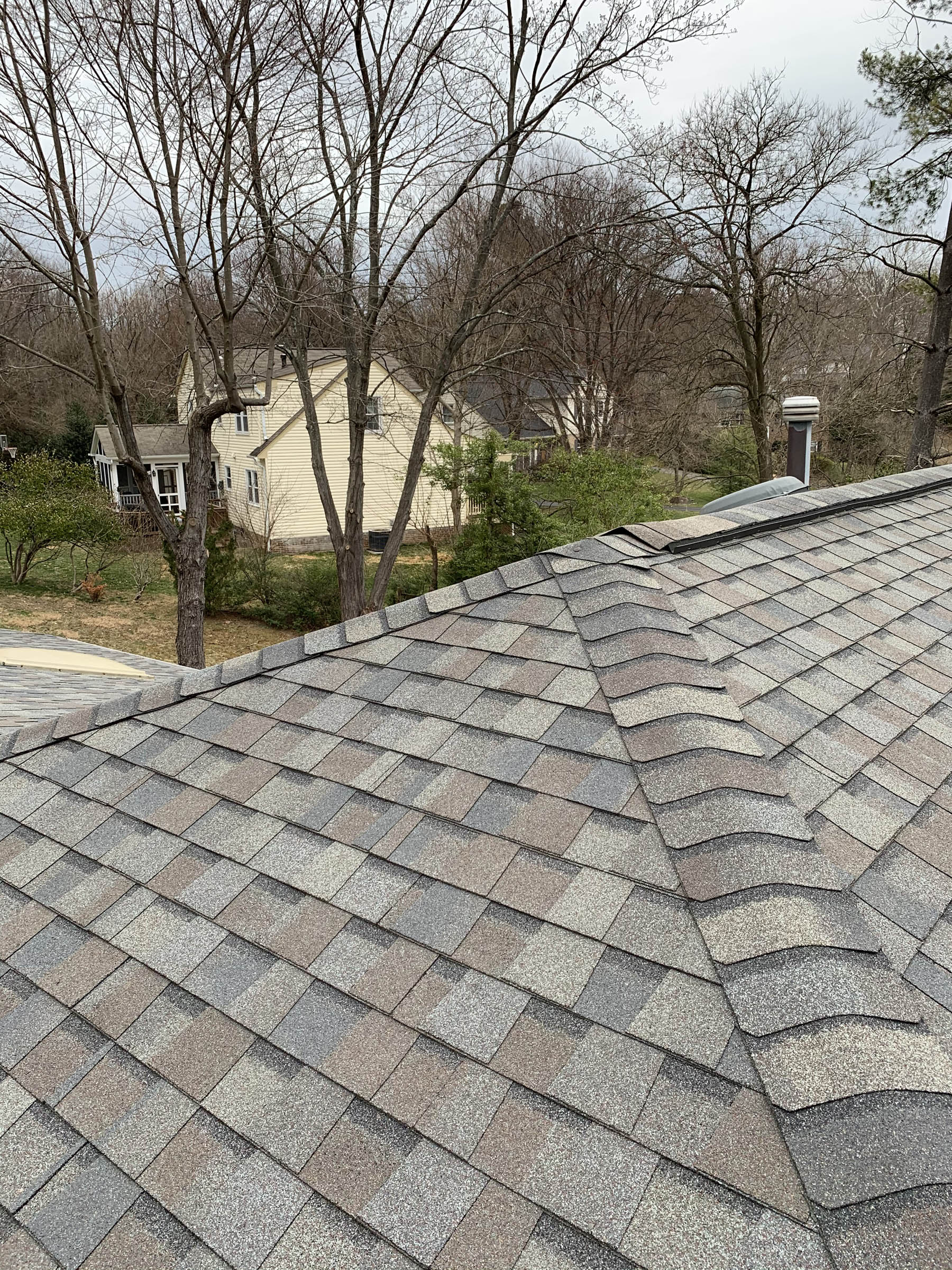
- Shingle type. Architectural shingles cost somewhat more than 3-tab but last longer and look better, and most homeowners choose them now.
| Roof type | Typical service life | Relative cost | Best fit |
|---|---|---|---|
| 3-tab asphalt | About 12 to 25 years | Lowest | Tight budgets, outbuildings |
| Architectural asphalt | About 25 to 40 years | Moderate | Most Northern Virginia homes |
| Standing seam metal (steel) | About 40 to 60 years | About 1.5 to 2.5 times shingles | Long-term owners, porch roofs, accents |
| TPO membrane | About 20 to 30 years | Varies with size | Low-slope porches, additions and flat sections |
Actual service life depends on ventilation, sun and tree cover.
How do you know it’s time to replace your roof?
- Age. 3-tab roofs here often wear out around 15 to 25 years, and architectural shingles commonly last 25 years or more.
- Granule loss. Bald patches, lots of grit in the gutters, or shingles that look smooth and shiny.
- Curling or cracking. Edges turning up or tabs splitting, often worst on slopes facing south and west.
- Repeated leaks. A third leak repair in a few years usually means the roof as a whole is failing.
- Sagging. A dip along the ridge or soft spots can mean rotted decking or a structural problem that needs a closer look soon.
Dark streaks on shaded slopes are usually algae, common in our humid climate and mostly cosmetic on their own.
Repair or replace?
A repair makes sense when damage is limited to one area, such as a few shingles blown off or a cracked pipe boot, and the rest of the roof has plenty of life left. Replacement makes more sense when the shingles are near the end of their service life, damage is spread across several slopes, or you’re chasing leaks year after year. If you’re dealing with recent storm damage, start with our guide to checking your roof after a summer storm, since insurance may cover part of the cost.
Do you need a permit to replace a roof in Fairfax County?
For most houses, no. Fairfax County’s permit guidance from Land Development Services lists replacement of roof shingles as work that doesn’t need a building permit, along with replacing less than 256 square feet (about 9 sheets) of roof plywood. That follows the Virginia Uniform Statewide Building Code, which exempts roof covering replacement on one- and two-family homes and townhouses in our wind zone. You will likely need a permit if:
- You replace 256 square feet or more of roof decking.
- The decking has to be fire rated, as is common on townhouses, even for smaller areas.
- Rafters, trusses or other framing need repair.
- Your home is in a locally designated historic district, where the building official may require permits for roofing.
Even without a permit, the work still has to meet the building code.
Can you put a new roof over the old one?
Sometimes, but there are firm limits. The residential code Virginia uses does not allow a new roof covering over an existing one when the roof already has two or more layers, when the existing roofing is water-soaked or too deteriorated to be a sound base, or when the existing covering is slate, clay, cement or asbestos-cement tile. The Asphalt Roofing Manufacturers Association also notes that most manufacturers don’t recommend new shingles over existing laminated shingles. We recommend a full tear-off on nearly every job, because it’s the only way to see and repair the decking and install the ice barrier and flashing properly.
Why is fall a good time to replace a roof?
Asphalt shingles have a heat-activated sealant strip that bonds each course to the one below once the sun warms it, and September and October usually bring plenty of mild, sunny days. Owens Corning’s 2026 cold-weather bulletin notes that shingles installed at or below 40°F may not seal until warmer weather arrives, and it calls for hand-sealing in those conditions. The catch is demand, so if you know your roof is due, schedule an inspection early.
What happens on install day
- The crew protects landscaping, lays tarps along the house and parks a dumpster or trailer.
- Old roofing comes off one section at a time, so the roof is never left wide open.
- We inspect the decking and replace any soft or rotted sheets.
- Drip edge, ice barrier and underlayment go down, followed by shingles, new flashing, vents and ridge cap.
- The crew cleans up and runs a magnetic sweeper over the yard and driveway to pick up nails.
Most single-family roofs take one to three days, weather permitting.

What should you know about roof warranties?
A new roof usually comes with two kinds of coverage. The manufacturer’s warranty covers defects in the shingles, and the contractor’s workmanship warranty covers the installation itself. Shingle warranties are often called “lifetime” but are prorated after an initial period. GAF, for example, pairs its standard limited lifetime warranty on Timberline shingles with a 10-year non-prorated period, while its enhanced system warranties extend that period and, at higher tiers, add workmanship coverage when a certified contractor installs a full system of qualifying components. Ask for both warranties in writing, find out whether they transfer if you sell, and make sure the roof is registered if the manufacturer requires it.
Low-slope roofs and gutters
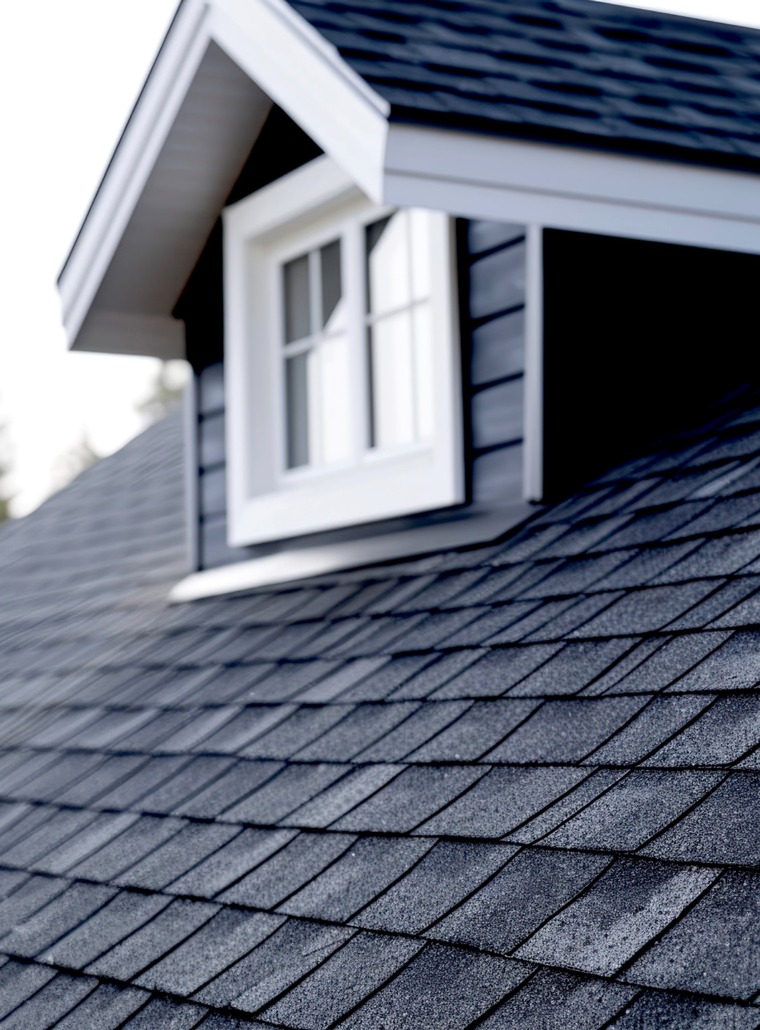
Shingles aren’t allowed on roofs flatter than 2:12 (2 inches of rise per foot), and slopes between 2:12 and 4:12 need a double layer of underlayment. Many Northern Virginia homes have a low-slope roof over a back porch, sunroom or rear addition, and that’s where we often find leaks. For those sections we typically use TPO, a single-ply membrane with heat-welded seams, tied into the main roof with proper flashing. If you’re planning a new porch, our comparison of screened porches, sunrooms and open decks covers the options.
If your gutters are dented, sagging or pulling away from the fascia, replacing them with the roof is usually the more efficient path, since drip edge and fascia repairs are simpler with the gutters down. Fairfax County doesn’t require a permit for gutters. Make sure downspouts discharge well away from the foundation, especially on the clay soils common across much of the county.
How we help with roof replacement
Our team has served Northern Virginia homeowners since 2010. We start with a free inspection, show you photos of what we see, and give you a written estimate that spells out the shingle line, underlayment, ventilation and flashing, plus a per-sheet price for any decking. Our roofing work carries a 10-year transferable labor warranty on top of the manufacturer’s warranty.
Learn more about our roofing and gutter services. If your siding is also due, our guide to fiber cement vs vinyl siding explains why doing both together can make sense.
Roof replacement FAQs
Can I stay home while my roof is being replaced?
Yes, most homeowners do. Expect steady noise starting in the morning, and keep pets and kids away from the work zone. Move cars out of the driveway, take fragile items off the walls on the top floor, and cover anything stored in the attic, since dust and debris can fall through gaps in the roof boards during tear-off.
Does a new roof increase home value?
It helps, though not dollar for dollar. The 2025 Cost vs Value report estimated that a mid-range asphalt shingle roof replacement recoups about 68% of its cost at resale nationally, and a metal roof about 50%. The bigger benefit is often avoiding trouble at sale time, since an old roof tends to come up in buyers’ inspections and negotiations.
Is a metal roof worth it in Northern Virginia?
It can be if you plan to stay a long time. Standing seam steel often lasts 40 to 60 years, compared with roughly 25 to 40 for architectural shingles, but it usually costs 1.5 to 2.5 times as much up front. Many homeowners use metal selectively, on porch roofs, bay windows or low-slope sections, and keep shingles on the main roof.
Will homeowners insurance pay to replace an old roof?
Not because of age alone. Homeowners policies generally cover sudden damage from events like wind or hail, not normal wear and tear. If a storm damages an older roof, your policy may pay actual cash value, which subtracts depreciation, rather than full replacement cost. Your agent can explain how your policy values the roof before you file a claim.
Cost figures are typical 2026 ranges for Northern Virginia, not quotes. Permit rules and warranty terms change, so confirm current requirements with Fairfax County Land Development Services before work begins.
If your roof is showing its age, fall is the time to get it done. Request a free roof inspection and estimate or call 703-587-7762, and we’ll help you decide whether to repair now or replace before winter.