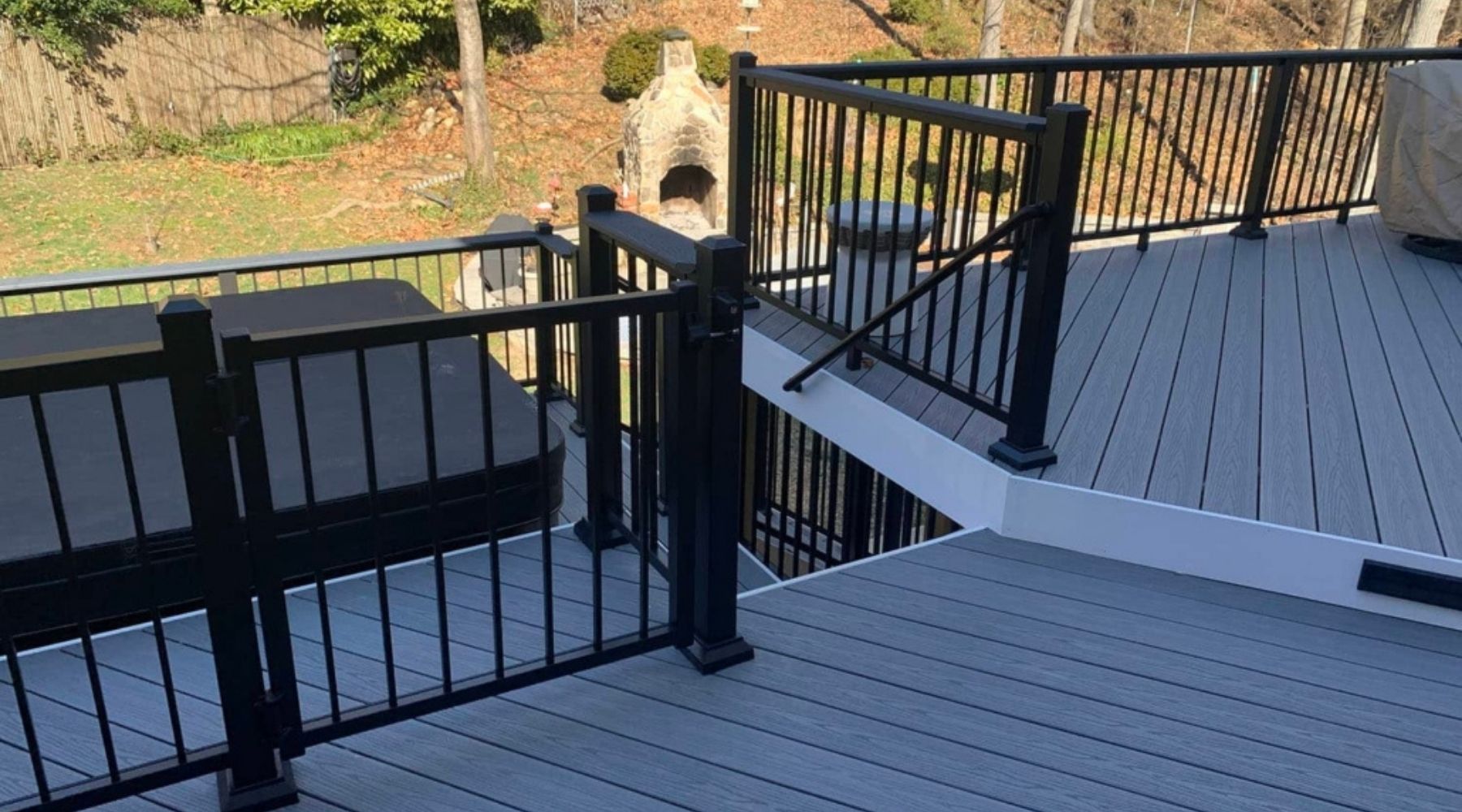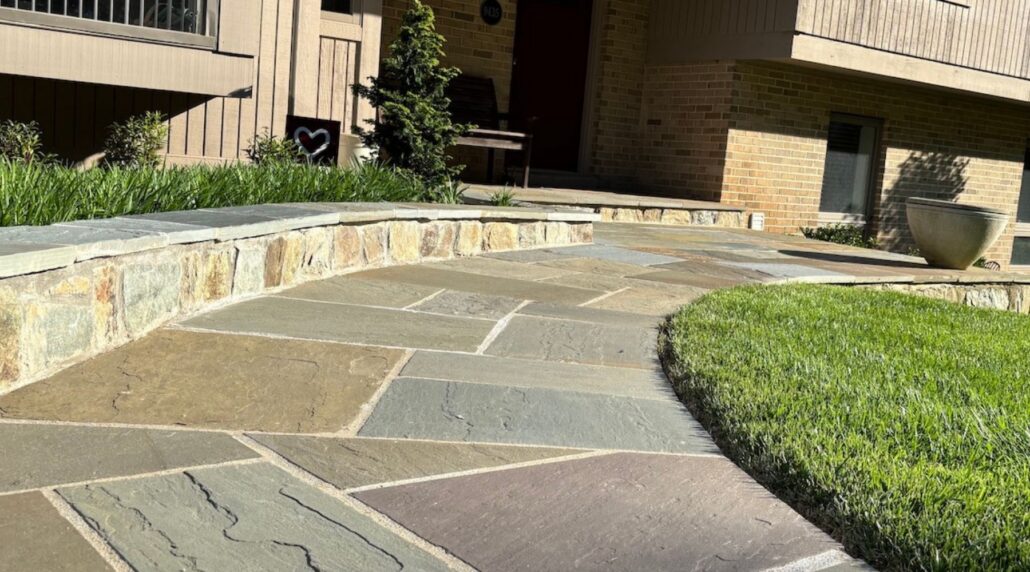

Fall is when a lot of homeowners start sketching next year’s deck, patio, or porch. If you live in a community association, the smartest thing you can do this season is get your architectural application in early, so a spring project is not stuck waiting on a committee meeting in April.
Do you need HOA approval for a deck, patio, or exterior project in Northern Virginia?
Short answer: If your home is in an HOA or community association, almost certainly yes. Most associations require architectural approval before you build a deck, patio, porch, fence, or addition, or change siding, roofing, windows, doors, or colors. HOA approval is separate from a Fairfax County permit, and many projects need both before work starts.
Why are so many Northern Virginia homes in an HOA?
Community associations are everywhere here. The Community Associations Institute estimates Virginia had about 9,300 associations with roughly 2 million residents in 2025, and in Northern Virginia, planned communities, townhouse neighborhoods, and newer subdivisions usually come with one.
Reston is the classic example. Reston Association’s Design Review Board reviews most exterior changes, and its design review FAQs are clear that owners cannot start work, even removing a tree, until they have a final written decision.
Older neighborhoods are more mixed. In our experience, many 1950s to 1970s subdivisions in McLean, Fairfax, and Vienna, VA have only a voluntary civic association with no design review, while others carry recorded covenants that still limit what you can build. To find out, check your deed, your community’s declaration and architectural guidelines, or the resale disclosure packet you received when you bought the house.
What usually needs architectural review?
Every association’s guidelines differ, but these projects almost always go to the architectural or design review committee:
- Decks and porches. New, enlarged, or rebuilt decks, screened porches, and covered porches, including changes to decking or railing material.
- Patios and hardscape. Patios, walkways, retaining walls, and changes to grading or drainage.
- Fences. Location, height, style, and material.
- Additions and sunrooms. Anything that changes the footprint or roofline.
- Siding, roofing, windows, and doors. Material, profile, and color changes. Some associations allow like-for-like replacement with a simple notice; others want a full application.
- Exterior colors. Paint, trim, shutters, front doors, and sometimes deck stain.
Like-for-like replacement is the gray area. Re-roofing with the same shingle and color may need only a notice, but switching from vinyl to fiber cement (see our fiber cement vs vinyl siding comparison) or changing window styles and grids (covered in our replacement windows guide) usually calls for a full review.
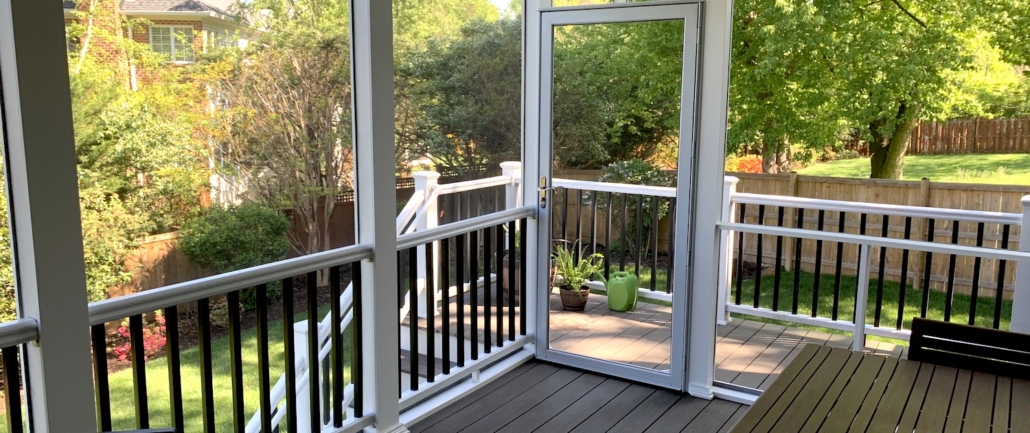
What goes into a complete HOA application?
Reston Association states plainly that incomplete submissions delay scheduling, and in our experience that holds true everywhere. A typical package includes:
- A plat or house location survey marked with the project’s location and dimensions to the property lines.
- Scaled drawings: a site plan plus elevations showing size, height, stairs, and railings.
- Material specifications with product photos or brochures: decking brand and color, railing style, paver type, or siding profile.
- Colors, with manufacturer and color names or samples.
- Photos of the house and the area where the work will happen.
- Neighbor notification where required. Reston, for example, asks single-family owners for signatures from at least three nearby owners, including an adjacent one, and those signatures confirm notification, not approval.
How long does HOA review take, and what slows it down?
Plan on a few weeks at a minimum, and longer for large projects or committees that meet once a month. Your declaration or architectural guidelines often say how long the committee has to respond.
Reston shows what a formal process looks like: review panels meet three Tuesdays a month, panel appointments must be booked at least a week ahead, and panel decisions go out about a week after the meeting. Simpler items, such as color changes and fences, can be handled by staff. Approved work there generally has to start within six months and be substantially complete within 18 months.
What slows things down:
- Missing drawings, specs, or color selections.
- Waiting on neighbor signatures.
- Requests that do not match the written guidelines, which means a revision and a second review.
- Committee schedules around summer vacations and the holidays.
- The spring rush, when everyone submits deck and patio applications at once.
Local tip: Submitting in fall or winter is the easiest way to protect a spring start date. Our post on the best time to build a deck in Northern Virginia explains why finishing design, HOA approval, and permits over the winter lets you build as soon as the weather turns.
Is HOA approval the same as a county permit?
No. They are separate approvals from separate bodies, and one does not count for the other. Fairfax County states that it has no authority over homeowners’ associations, and an HOA has no say over the building code. A new deck needs a county building permit no matter what your HOA approves (our Fairfax County deck permit guide walks through the county side).
Some projects have several layers. In the Town of Vienna, decks and additions get town zoning review on top of the county building permit, and homes in the Windover Heights Historic District also need a Certificate of Appropriateness. An on-grade patio, by contrast, usually needs no county building permit but still needs HOA approval, as we explain in our pavers vs concrete vs flagstone patio guide.
The sequence that works: get HOA approval first or alongside the permit drawings, and do not start work until both are in hand. If the committee asks for changes, the permit drawings may need to change too, so one set of plans that serves both saves time.
What can happen if you skip HOA approval?
Building first and asking later rarely pays off. Under Virginia’s Property Owners’ Association Act, an association must give written notice, a chance to fix the problem, and a hearing. After that it can charge up to $50 for a single violation or $10 per day for a continuing one, for no more than 90 days. It can also go to court, where a judge can order the violation corrected and the prevailing side recovers attorney fees.
Problems also surface when you sell. Virginia’s Resale Disclosure Act requires the association’s disclosure packet to state whether the board has issued written notice that existing alterations or improvements violate the rules, so an unapproved deck can come up in the middle of a sale.
Watch out: A contractor who says “we never bother with the HOA” is handing you the risk. The violation attaches to your property, not to the contractor.
How a contractor helps with HOA approval
On most exterior projects, we prepare the drawings, material specs, and color selections your committee asks for, marked on your plat, so you can submit a complete package the first time. We sequence the work so HOA approval and county permits move together, and we do not start building until both are approved.
If a deck or porch is on your list for next spring, start with our decks and porches page. We work with associations and town reviews across Vienna, McLean, Fairfax, Great Falls, Oakton, and the surrounding communities.
HOA approval FAQs
Can my HOA control what roof or windows I install?
If your governing documents give it that power, an association can generally regulate the look of exterior replacements, such as approved colors, materials, or styles. Many allow like-for-like replacements with a simple notice. Read your architectural guidelines, and submit an application before changing color, material, or style.
Do I need HOA approval to rebuild a deck the same size?
Often, yes. Many associations treat a rebuild like new construction, especially if the materials, railings, colors, or stairs change. Even an exact replacement may require a notice or short application. Check your guidelines, and remember that rebuilding a deck usually needs a Fairfax County building permit as well.
What if my HOA does not respond to my application?
Check your declaration and architectural guidelines first, because they often set a response deadline and say what happens if the committee misses it. Follow up in writing and keep copies. If you believe the association is breaking Virginia common interest community law, use its complaint procedure; the state Common Interest Community Ombudsman can step in if it does not respond.
Do I need my neighbors’ permission to build a deck?
Usually not permission, but you may need to notify them. Some associations, including Reston Association, require signatures from nearby owners, and those signatures confirm that neighbors were notified rather than giving them a veto. Neighbors can still comment, and in some associations they can appeal a decision that affects them.
Can I appeal an HOA denial?
Most associations have an appeal process in their governing documents. Appeals go better with new information, such as revised drawings, a different material, or evidence that a guideline was misapplied. Often the fastest path is to ask the committee what would make the project approvable, revise, and resubmit.
This article is general information, not legal advice. Association rules vary widely, so read your governing documents and contact your association or an attorney with specific questions.
Planning a deck, porch, or patio for next spring? Request a free consultation or call 703-587-7762, and we will help you put together the drawings and specs that keep your HOA and permit approvals on schedule.